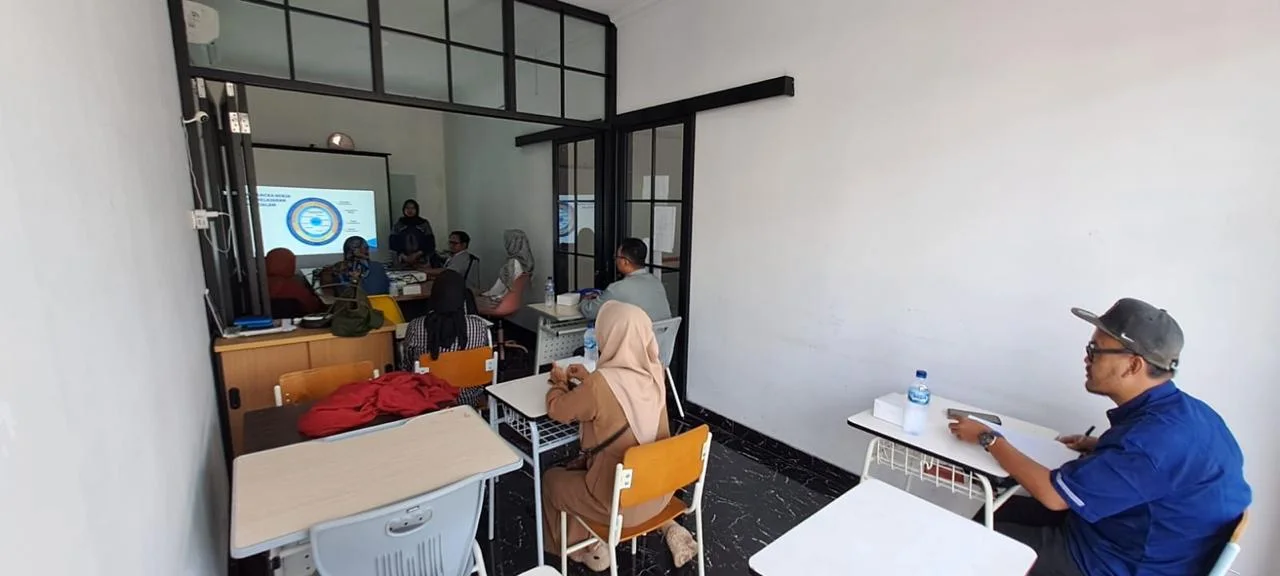
One of the most common questions parents ask when considering homeschooling is: "Will the qualification be recognised by the government?" This is an important consideration because education documents may be required for further study and employment. This article explains the position of PKBM compared with formal schools and how homeschooling can connect with recognised equivalency pathways in Indonesia.
The Legal Basis of Non-Formal Education in Indonesia
Homeschooling in Indonesia can connect with the national education system through non-formal and family-based education pathways. One institution commonly associated with non-formal education is a PKBM (Pusat Kegiatan Belajar Masyarakat / Community Learning Activity Centre).
Through an officially registered PKBM and the relevant equivalency pathway, learners may pursue Paket A (equivalent to primary school), Paket B (equivalent to junior secondary school), and Paket C (equivalent to senior secondary school).
Key Differences Between PKBM and Formal Schools
| Aspect | Formal School | PKBM (Equivalency Education) |
|---|---|---|
| Education pathway | Formal | Non-formal |
| Qualification type | SD/SMP/SMA school certificate | Paket A/B/C equivalency certificate |
| Government recognition | Recognised | Recognised through the applicable equivalency pathway |
| Curriculum flexibility | Primarily follows the national school structure | Can be combined with other learning approaches, including international curriculum options |
| Learning model | Classroom-based, fixed timetable | Can be adapted to individual or small-group learning |
| Oversight | Education authorities | Relevant education authorities and non-formal education quality mechanisms |
The main difference is the education pathway, rather than simply whether a qualification is "valid" or "invalid".
What Should Parents Check?
A homeschooling provider should not be assumed to have recognised education documentation merely because it uses the term "homeschooling". Parents should check the institutional and administrative pathway carefully, including:
- Official registration and NPSN — whether the institution is recorded in the relevant national education data system.
- Accreditation status — where applicable, check the institution's current accreditation and validity period.
- Equivalency assessment procedures — ask how learners complete the requirements for Paket A/B/C and which authority administers the process.
- Student education records — ensure the learner's academic records are maintained through the applicable education system.
Parents should verify current requirements directly with the relevant institution and education authority because administrative procedures can change.
Combining an Indonesian Pathway with an International Curriculum
A flexible homeschooling model may allow students to combine an Indonesian equivalency pathway with an international curriculum such as Pearson Edexcel or Cambridge. In this type of arrangement, students may pursue Indonesian education documentation while also working toward international qualifications such as IGCSE or A Level.
This model can be relevant for families who:
- Plan for overseas university study while maintaining an Indonesian education pathway.
- Want flexible learning without giving up formal documentation options.
- Live abroad and need an education route that can connect with both Indonesian and international systems.
What Parents Should Check Before Choosing a PKBM
Before enrolling, parents should:
- Confirm that the institution's NPSN is active.
- Check its current accreditation status and validity period.
- Ask how the equivalency process is administered.
- If an international curriculum is offered, verify the provider's official status with the relevant awarding organisation, such as Pearson Edexcel or Cambridge.
Conclusion
A PKBM and a formal school operate through different education pathways. For homeschooling families who use an equivalency route, the key is to ensure that the institution and administrative process are officially registered and that all applicable requirements are met. This can provide families with a flexible learning model while maintaining access to recognised Indonesian education documentation and, where relevant, international qualifications.
Before enrolling in a homeschooling provider, always verify the institution's current NPSN, accreditation status, and equivalency procedures through the appropriate official channels.
Still considering a homeschooling pathway for your child? Explore Discovery Private learning programmes or discuss your family’s academic needs with admissions.