

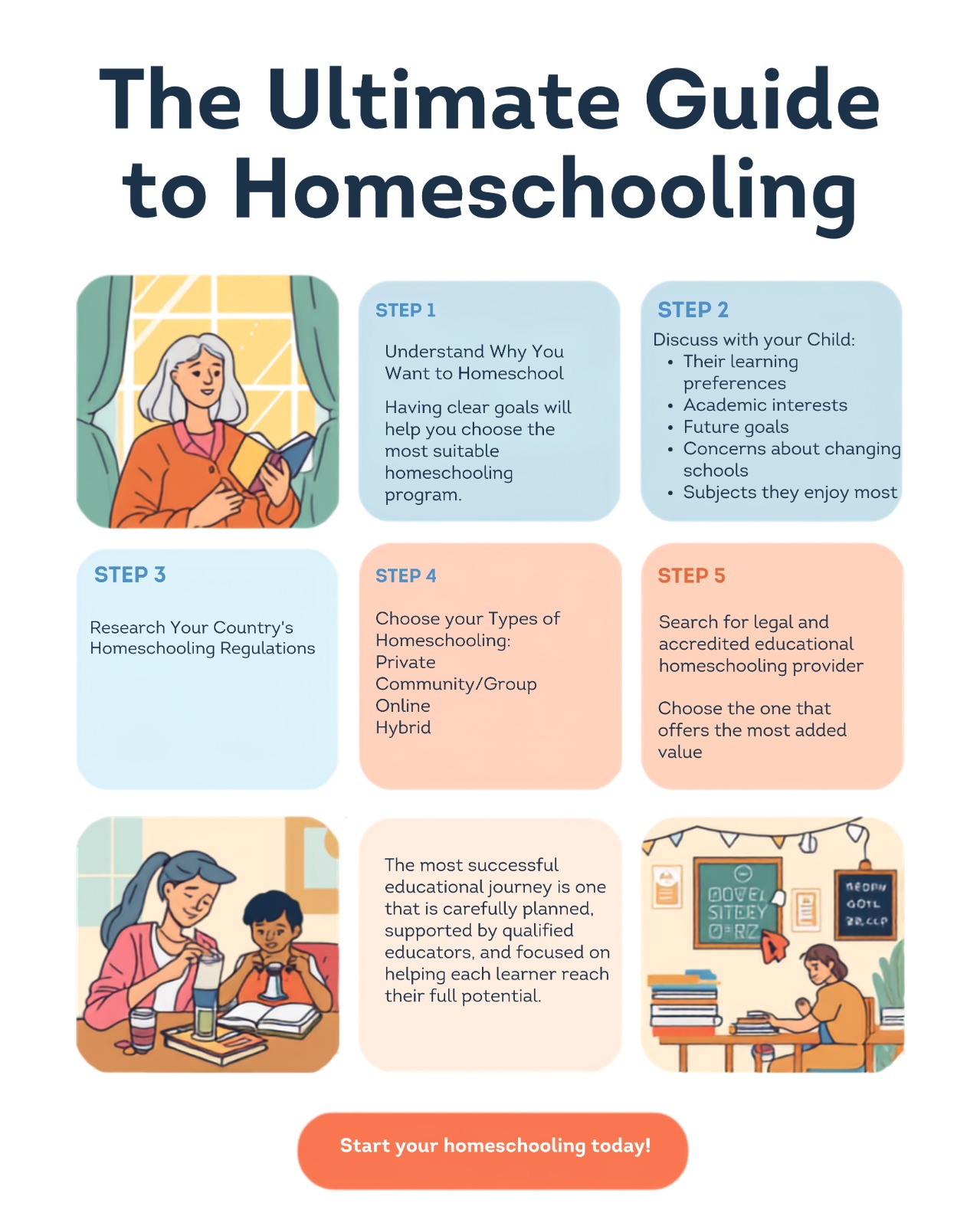
17 Jul The Ultimate Guide to Homeschooling (2026 Edition)
Everything Parents Need to Know Before Choosing Homeschooling
Introduction
Education is changing.
For generations, attending a traditional school was considered the only path to academic success.Today, families have more choices than ever before. Technology, personalized learning, andinternationally recognized curricula have transformed the way children can learn.
Homeschooling has become one of the fastest-growing educational models worldwide because itallows learning to be tailored to each child’s needs while maintaining high academic standards.
This guide is designed to help parents understand homeschooling, how it works, who it is suitable for,and how to choose the right program.
What Is Homeschooling?
Homeschooling is a legal educational approach in many countries where a child’s education is primarilydirected by parents or guardians, often with support from qualified teachers, online learning platforms,or registered educational providers.
Modern homeschooling is far more structured than many people imagine. Students typically follow aplanned curriculum, complete assignments, receive feedback from teachers, and participate inassessments according to the educational pathway they choose.
Types of Homeschooling
- Traditional Homeschooling
Parents take primary responsibility for teaching and selecting learning materials.
Best suited for:
- Families with time to teach directly.
- Younger children.
- Parents who prefer maximum flexibility.
- Online Homeschooling
Students learn through live virtual classes, recorded lessons, and digital resources.
Advantages:
- Flexible schedules.
- Access to qualified teachers.
- Learning from anywhere in the world.
- International curriculum options.
- Hybrid Homeschooling
A combination of home-based learning and face-to-face sessions at a learning center or with privatetutors.
Suitable for students who benefit from both flexibility and in-person interaction.
- Private Homeschooling
Students receive one-on-one or small-group instruction with dedicated teachers.
Ideal for:
- High-performing students.
- Student athletes.
- Young performers.
- Families seeking highly personalized education.
Why Parents Choose Homeschooling
Families choose homeschooling for many different reasons.
Personalized Learning
Every child learns differently. Homeschooling allows instruction to move at a pace that matches thelearner’s strengths and areas for improvement.
Flexible Schedule
Learning can be arranged around travel, sports, artistic commitments, family routines, or health needs.
International Curriculum
Many homeschooling providers offer globally recognized curricula such as Cambridge or PearsonEdexcel, helping students prepare for higher education opportunities around the world.
Smaller Learning Environment
With fewer students per teacher, learners often receive more individual attention and targeted support.
Parent Involvement
Homeschooling encourages close collaboration between educators and families, allowing parents tostay actively engaged in their child’s progress.
Is Homeschooling Legal?
Homeschooling regulations differ between countries and, in some cases, between regions within acountry.
Parents should always check local laws and choose educational providers that comply with applicableregulations.
Who Benefits Most from Homeschooling?
Homeschooling may be particularly suitable for:
- Students who need flexible schedules.
- Families living abroad.
- Children pursuing sports, arts, or entrepreneurship.
- Learners seeking a personalized pace.
- Families who relocate frequently.
- Students preparing for international qualifications.
- Families looking for a learning environment that aligns with their educational values.
Each child is unique, and homeschooling is one option among many that may or may not be the best fitdepending on individual circumstances.
Common Myths About Homeschooling
Myth 1: Homeschooled children do not socialize.
Socialization depends on the quality and variety of experiences children have. Many homeschooledstudents participate in clubs, sports, volunteering, community projects, competitions, and enrichment activities.
Myth 2: Homeschooling is easier than school.
A well-designed homeschooling program is structured and requires consistent effort from bothstudents and families.
Myth 3: Homeschooled students cannot enter university.
Many universities worldwide consider applicants from homeschooling backgrounds when they meetthe institution’s admission requirements and hold accepted academic qualifications.
How to Choose the Right Homeschool Program
When evaluating a homeschooling provider, consider:
- Curriculum quality.
- Teacher qualifications.
- Student support.
- Assessment methods.
- Academic pathways.
- Communication with parents.
- Technology platform.
- Student well-being.
- Accreditation or recognition where applicable.
- Track record and outcomes.
Ask detailed questions before enrolling to ensure the program matches your child’s needs and yourfamily’s goals.
Frequently Asked Questions
At what age can a child start homeschooling?
This depends on local regulations and family preferences. Many children begin during their primaryschool years, while others transition later.
How many hours should students study?
The amount of study time varies according to age, curriculum, and learning objectives. Quality oflearning is generally more important than simply counting hours.
Can homeschooled students take international examinations?
Many homeschooling pathways prepare students for internationally recognized examinations,depending on the curriculum they follow and the assessment arrangements available.
Can homeschooled students apply to universities abroad?
Many universities accept qualified homeschooled applicants. Families should review the admissionpolicies of each institution they are interested in.
The Future of Homeschooling
Educational technology, online learning, artificial intelligence, and global collaboration are expandingthe possibilities for personalized education.
Rather than replacing traditional schools, homeschooling has become another pathway that allowsfamilies to choose an approach that best matches their child’s needs.
Final Thoughts
Every child deserves an education that helps them grow academically, socially, emotionally, andethically.
Homeschooling is not the right choice for every family, but for many it offers the flexibility,personalization, and learning environment they are seeking.
The most successful educational journey is one that is carefully planned, supported by qualifiededucators, and focused on helping each learner reach their full potential.
